A historic object becomes more interesting when you can understand the work that produced it. In Williamsburg, the historic trades provide a way to look beyond a finished building, a printed page or a piece of furniture. They invite questions about materials, training, labor and the people who used the result.
Watch a process before collecting facts
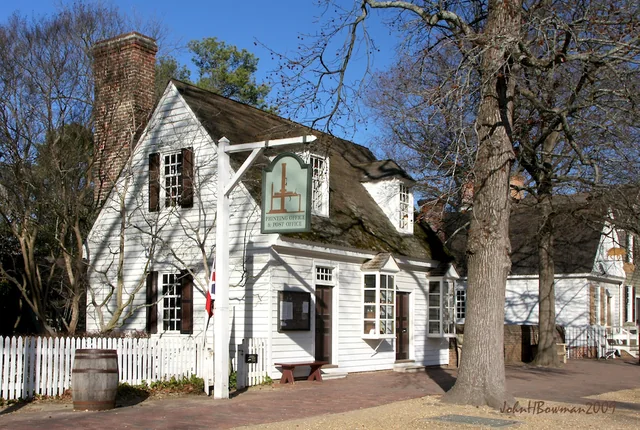
The printing trade is a useful starting point. Colonial Williamsburg’s printers demonstrate setting type and using reproduction presses to make newspapers, notices, pamphlets and books. A printed page therefore becomes the end of a sequence of decisions and physical actions, rather than an object that simply appeared in the eighteenth century.

Americas Historic Triangle: Colonial Williamsburg, Jamestown and Yorktown
Immerse yourself in early American history with a journey connecting colonial Williamsburg, the historic battlegrounds of Yorktown, and the story of e...

Colonial Williamsburg Admission
The Revolution is Here! Immerse yourself in the revolutionary stories of American history. With over 300 acres of ic...

Colonial Williamsburg - Private Tour Celebrating American History
Time travel to 1775 with a private tour and explore the birth place of American history. Points of interest include...
Try following one part of that sequence closely. Notice how a letter is selected, how a line is arranged or how an impression is made. If a demonstration is in progress, let the interpreter complete the action before asking a question. A short, specific question often opens a more useful conversation than asking for the entire history of the trade at once.
Ask questions that reveal choices
- What material is being used, and why is it suited to this task?
- Which part of the process needs the most practice?
- How would the work have been organized between different people?
- What can a reproduction show clearly, and what remains uncertain?
These questions work across trades. They draw attention to judgment and labor without assuming that every craftsperson had the same status, working conditions or freedom. They also help separate the interpretation you can observe today from claims about a particular historical individual.
Read reconstructed places carefully
The Historic Area contains different kinds of surviving, restored and reconstructed fabric. A building can be valuable for interpretation without every visible surface being original. Labels, institutional research and the explanations of interpreters are the right places to establish that distinction.
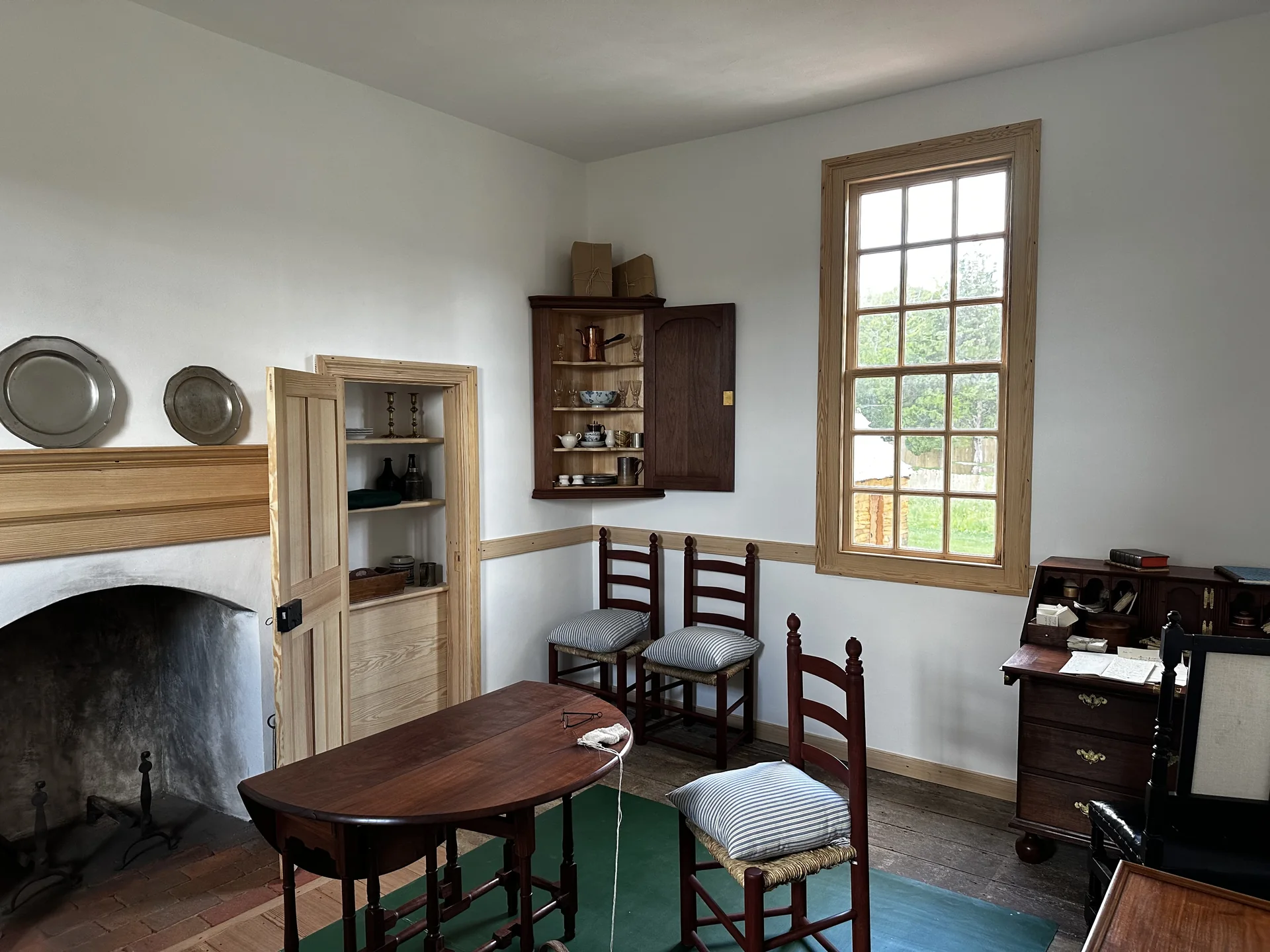
The Bray School makes the importance of careful language especially clear. Its restored interior helps interpret a school for enslaved and free Black children. Original material, restoration work and interpretive furnishings do not all carry the same evidential weight. A photograph of a restored room should not be mistaken for a view preserved unchanged since the school operated.
Look for the difference between what survives, what has been reconstructed and what an interpretation asks you to consider.
Let the visit include more than aesthetics
Beautifully made objects can draw you in, but beauty alone is an incomplete account of the past. A tool, a building or a printed text can raise questions about who worked, who learned, who had access and whose choices were constrained. Give those questions room alongside an appreciation of skill.
Indigenous peoples were also part of eighteenth-century Williamsburg’s life. Avoid assuming that an account centered on colonial institutions describes every community in the same way. When a program addresses Indigenous history, attend to the names and perspectives being presented rather than looking for a generic cultural symbol or costume.
Build a satisfying trade-focused visit
- Pick one trade that connects with an interest you already have.
- Check the institution’s current program and admission information.
- Allow time to watch, not only to enter and leave a workspace.
- Take a break before adding another complex subject.
A trade-focused morning pairs naturally with a slower walk or lunch around Merchants Square. If you are still planning the broader shape of the trip, start with the first-visit guide. The value of a focused visit lies in what you notice, not the number of workshops you can list afterward.
Research sources

Secret Lives on Colonial Women
Join us as we explore the fascinating stories of women from all walks of life—each of whom played her part in the...

Patriots Tour of Colonial Williamsburg or Williamsburg 101
Our tour is filled with historic information in the city where it happened! We present the events of the 1770s in a...

Jamestown Settlement American Revolution Museum 7-Day Ticket
Visit Jamestown Settlement and the American Revolution Museum at Yorktown and immerse yourself in American Colonial...
Americas Historic Triangle: Colonial Williamsburg, Jamestown and Yorktown
Immerse yourself in early American history with a journey connecting colonial Williamsburg, the historic battlegrounds of Yorktown, and the story of e...
Colonial Williamsburg Admission
The Revolution is Here! Immerse yourself in the revolutionary stories of American history. With over 300 acres of ic...
Colonial Williamsburg - Private Tour Celebrating American History
Time travel to 1775 with a private tour and explore the birth place of American history. Points of interest include...
Colonial Williamsburg’s Printer interpretation, Williamsburg Bray School and American Indian heritage interpretation.